How to Measure Anything
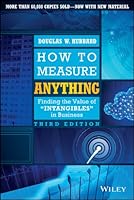
Author: Douglas W. Hubbard
A field guide to quantifying the things people insist are “intangible.” Hubbard’s claim is blunt: anything that matters can be observed, anything observable can be measured, and a measurement that merely reduces uncertainty — not eliminates it — is already worth making.
Why This Book Matters to Me
Early in my product management days — 2009–2010 my edge was always being very analytical about product thinking. This book changed how I approach measurability itself. It reframed three questions I keep coming back to:
- How do you take bets?
- How do you decide?
- And how do you build probabilistic, analytical thinking when you have nothing to start with?
The Core Argument
“A measurement is a quantitatively expressed reduction of uncertainty based on one or more observations.”
Most people treat measurement as the act of producing an exact number. Hubbard redefines it: a measurement is anything that leaves you less uncertain than you were before. Once you accept that, the category of “immeasurable” collapses — because you almost never need certainty, you need enough information to make a better decision.
The Three Reasons People Think Something Is Immeasurable
- Concept — they don’t actually know what they mean by the thing (e.g. “innovation,” “customer satisfaction”). Define it well and it usually becomes observable.
- Object — they don’t know what to observe. There is almost always a visible trace if the thing has any effect on the world.
- Method — they don’t know the technique. This is a knowledge gap, not a property of the thing being measured.
Key Insights
The Measurement Inversion: The variables managers spend the most effort measuring are often the ones with the least decision value, while the high-information variables go unmeasured. Before measuring anything, compute what reducing its uncertainty is actually worth — the Expected Value of Information (EVI).
You have more data than you think — the Rule of Five: There is a 93.75% chance that the median of a population lies between the smallest and largest values in a random sample of just five. Tiny samples carry far more signal than intuition credits.
Calibrate your estimates: Most experts are systematically overconfident. People can be trained — through calibration exercises — to give 90% confidence intervals that are actually right 90% of the time. Good estimation is a learnable skill, not a personality trait.
Just start measuring: “It’s not measure to act, it’s act to measure.” The first imperfect observation tells you where the uncertainty really lives, which tells you what to measure next.
“simple statistical models outperformed human judgment in a wide range of tasks.” (Location 1151)
The Bottom Line
Stop asking “Can this be measured?” and start asking “What decision would a measurement improve, and by how much?” Uncertainty has a cost; reducing it has a value; and the cheapest reduction is usually a far smaller, messier observation than you’d assume.