A Mind for Numbers
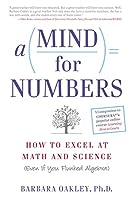
Author: Barbara Oakley
A neuroscience-backed guide to learning effectively, especially in technical domains. Oakley explains how the brain’s focused and diffuse modes work together to build understanding.
Why This Book Matters to Me
Oakley’s distinction between focused and diffuse modes changed how I structure my workday. Key questions I keep returning to:
- When to Push, When to Step Away: How do you know when you’re productively stuck vs. unproductively grinding?
- Chunking: How do you build mental models that make complex domains navigable?
- Spaced Repetition: How do you ensure learning actually sticks?
The insight that breaks aren’t laziness but a necessary part of learning was liberating.
The Two Modes
Focused mode involves a direct approach to solving problems—rational, sequential, analytical. It’s associated with the concentrating abilities of the prefrontal cortex.
Diffuse mode works in the background, making semi-random connections across distant areas of the brain.
“The harder you push your brain to come up with something creative, the less creative your ideas will be.”
The key is to do something else until your brain is consciously free of any thought of the problem.
The Focused-Diffuse Dance
Use the focused mode to first start grappling with concepts. After you’ve done your first hard focused work, allow the diffuse mode to take over. Relax and do something different.
“When frustration arises, it’s time to switch your attention to allow the diffuse mode to begin working in the background.”
Work in small doses—a little every day. This gives both modes the time they need. When tackling a tough problem, work on it for a few minutes. When stuck, move on. Your diffuse mode continues working in the background.
On Chunking
One of the first steps toward gaining expertise is to create conceptual chunks—mental leaps that unite separate bits of information through meaning.
Three steps to chunking:
- Focus your attention on the information you want to chunk
- Understand the basic idea you are trying to chunk
- Gain context so you see not just how, but also when to use this chunk
When building a chunked library, keep deliberate focus on the toughest concepts.
On Retrieval Practice
“Attempting to recall the material you are trying to learn—retrieval practice—is far more effective than simply rereading.”
In the same amount of time, by simply practicing and recalling, students learned far more and at a much deeper level than with any other approach.
When marking up text, look for main ideas before making any marks. Keep markings to a minimum—one sentence or less per paragraph.
On Creativity and Intuition
“Creativity is a numbers game: The best predictor of how many creative works we produce in our lifetime is… the number of works we produce.”
A key difference between creative scientists and technically competent but nonimaginative ones is their breadth of interest. Bill Gates and other industry leaders set aside extended, weeklong reading periods to hold many varied ideas in mind.
Most difficult problems are solved through intuition, because they make a leap away from what you’re familiar with. But intuitive insights should be carefully verified—they aren’t always correct.
On Procrastination
Finding ways to reward good study habits is vital to escaping procrastination.
“The only place you need to apply willpower is to change your reaction to the cue.”
A good rule of thumb: when first learning new concepts, don’t let things go untouched for longer than a day.
The Bottom Line
You can’t learn without a healthy dose of practice and repetition to build the chunks that underpin expertise. Space your repetition out over days. Let the focused mode plant the seed, then give the diffuse mode time to make connections. The “slow hunch”—years-long simmering of focused and diffuse processes—is how creative breakthroughs happen.