7 Powers
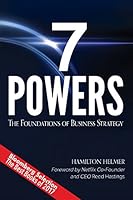
Author: Hamilton Helmer
A framework for understanding the sources of durable business value. Helmer argues that strategy is fundamentally about achieving Power — conditions that create persistent differential returns.
Why This Book Matters to Me
As a student of startups, I’m obsessed with the David vs. Goliath problem: how do you build from a position of perceived weakness? How does an upstart compete against entrenched incumbents with more resources, more customers, more everything?
This is where 7 Powers clicked for me. A few questions I keep coming back to:
- Counter-positioning: How do you find an angle where your weakness becomes the incumbent’s dilemma? Where copying you would cannibalize their existing business?
- Switching costs: How do you design your product so that customers become more invested over time — not through lock-in tricks, but through genuine accumulated value?
- Power progression: Helmer argues different Powers become available at different stages. What does that mean for sequencing your strategic moves? When do you focus on scale economies vs. brand vs. network effects?
The insight that stuck: Power isn’t something you stumble into. It’s something you architect — but only if you know what you’re looking for.
Core Definitions
Strategy: The study of the fundamental determinants of potential business value.
Power: The set of conditions creating the potential for persistent differential returns.
strategy (lowercase): A route to continuing Power in significant markets.
The Two Questions of Strategy
Strategy can be separated into two topics:
-
Statics — “Being There”: What makes a business durably valuable? (e.g., What makes Intel’s microprocessor business so valuable?)
-
Dynamics — “Getting There”: What developments yielded this attractive state in the first place?
What Makes Power
Two components must be simultaneously present:
-
A Benefit: Some condition which yields material improvement in cash flow — via reduced cost, enhanced pricing, or decreased investment requirements.
-
A Barrier: Some obstacle which engenders in competitors an inability or unwillingness to engage in behaviors that might arbitrage out this benefit.
“Such a competitive cul-de-sac is the hallmark of Power.”
Key Insights
Power vs. Operational Excellence: Under Andy Grove, operational excellence was the norm at Intel — so it was Power that made the difference. Competitive arbitrage drove margins in memories negative, whereas Power enabled Intel to maintain high positive margins in microprocessors.
Less is More: “By adopting a heterodox, narrower view of Strategy and strategy, we gain considerable conceptual clarity and substantially enhance the usefulness of the concepts.”
Learning Economies: If learning leads to a benefit (reduced cost or improved deliverables) and is positively correlated with production levels, then a scale advantage accrues to the leader.
The Bottom Line
The arc of any celebrated business is underpinned by decisive strategy choices that are few and typically made amidst profound uncertainty. Power — not just operational excellence — is what creates durable value.